System Overview & Quickstart
Get Started & How It Works
D6 Storyteller is a fiction-first tabletop roleplaying engine. It resolves uncertain actions using pools of standard six-sided dice, puts narrative context before mechanics, and gets any group playing in under fifteen minutes.
Watch First
How to Play in 60 Seconds
The entire core loop, animated: describe your character with Approaches, let the Storyteller set your Position and Effect, build a pool of six-sided dice, and read the single highest die. No sound needed.
Full transcript of the video (on-screen text)
How to Play. A fiction-first tabletop RPG: the entire core loop, in one roll of six-sided dice.
- Step 01 – Describe your character. Split 8 dice across four Approaches: Force, Finesse, Mind, and Presence.
- Step 02 – Set the stakes. Trying something risky? The Storyteller sets your Position and Effect. Position (the danger): Controlled, Risky, or Desperate. Effect (the payoff): Limited, Standard, or Great.
- Step 03 – Build the pool. Gather your d6. Finesse 3d6 plus 1 Momentum equals 4d6.
- Step 04 – Roll and read the single highest die. No adding up. No modifiers. The top face alone decides the outcome.
- Step 05 – Resolve. Three ways it lands:
- 6 — Full Success: you do it. Roll two or more 6s and you get Great Effect.
- 4–5 — Partial Success: you do it, but at a cost, complication, or reduced effect.
- 1–3 — Failure: it goes wrong and a consequence hits, but the story pushes on.
Push your luck – Spend Momentum. Spending 1 Momentum adds +1d6 to your pool. More dice means more chances to land a 6.
Grab your d6s. Visit d6storyteller.alexmerced.com for the free dice roller, the Get Started guide, and the Core Rulebook.
What You Need to Start
Contains the complete rules engine plus ten starter worlds. Everything a group needs in one book.
Four to six d6 per player is ideal. Check your board game shelf: standard d6s are all you need.
For character notes. Index cards work great. No proprietary character sheet required to begin.
Pick a setting from the Core Rulebook, choose or build your characters, and frame your first scene.
The Core Philosophy
What Does "Fiction First" Mean?
In traditional tabletop RPGs, players pick an action from a menu of skills or spells and add numeric modifiers. D6 Storyteller inverts this approach:
First establish the fiction: Where is your character? What are they attempting? Are they holding the high ground or cornered in a burning corridor? What tools or preparation do they have?
Then set the mechanics: That fictional reality dictates your approach, your position (how risky it is), and your effect (how much you achieve). The dice confirm what happens; the story drives the roll.
Core Mechanics
Six Steps. Every Roll.
From picking a lock to commanding a naval fleet, every test in D6 Storyteller follows the same six steps:
Describe the Scene
Before any dice touch the table, the group establishes what is happening in the fiction. Where is your character? What are they attempting? What could go wrong, and what does success look like? Narrative context establishes the stakes.
Determine Position and Effect
Position describes how vulnerable your character is if things go wrong: Controlled (upper hand), Risky (standard stakes), or Desperate (real danger). Effect describes how much you can achieve: Limited, Standard, or Great. Position and effect are set through story context, not arithmetic.
Choose Your Approach
Your character has four core approaches: Force (direct physical action), Finesse (precise, quick, or subtle action), Mind (analysis, planning, knowledge), and Presence (social influence, leadership). Choose the one that matches how your character acts in the fiction.
Assemble Your Dice Pool
Start with your approach dice (rated 1d6 to 4d6). You can modify your pool: teamwork assistance adds dice, advantage or tools add dice, or you can spend 1 Momentum from your group pool to add a die or upgrade position/effect.
Roll and Read the Highest Die
Roll your assembled pool and read the single highest die face: 6 = Full Success (multiple 6s = Great Effect); 4–5 = Partial Success (you succeed, but with a complication or cost); 1–3 = Failure (the action fails and a consequence follows). No math modifiers are added.
Narrate the Outcome
The roll tells you the outcome tier. The table fills in the fiction. On a Full Success, describe how you pulled it off. On a Partial, the Storyteller introduces the cost and you respond. On a Failure, the consequence strikes, and the story continues without stopping.
Quick Dice & Result Reference
Assemble your pool. Roll. Read the single highest die. No arithmetic needed.
You achieve what you set out to do. Multiple 6s = Great Effect (more, faster, or lasting impact).
You accomplish your goal, but at a cost: a complication, minor harm, or reduced effect. The story moves forward.
You don't get what you wanted, and a consequence strikes. Failure is never a dead stop; it propels the narrative.
Position affects consequences, not roll math. A Controlled failure is a minor setback. A Desperate failure is a major crisis. Risky sits in between.
Actual Play Example
Sample Game Walkthrough
Let's walk through a live scene to see how approach, position, dice pools, and momentum interact in actual play.
The Setup: Breaking into the Alchemical Vault
Vance (a rogue investigator) is attempting to bypass a bronze alchemical lock on a vault door in the Aether & Iron setting. A steam-automaton sentry is patrolling the far end of the hallway.
Determining Approach, Position & Effect
- Approach: Vance picks the lock using delicate pick tools. This is a Finesse approach (Vance has 3d6 in Finesse).
- Position: The Storyteller assesses the scene: "You're working quietly, but if you make noise, the sentry hears you. The position is Risky."
- Effect: "Your tools are tailored for alchemical locks. If you succeed, you open it cleanly. The effect is Standard."
Modifying the Dice Pool with Momentum
Vance starts with 3d6 (Finesse rating). Wanting to ensure the door opens before the sentry turns around, Vance asks the team: "Can I withdraw 1 Momentum from our team's Momentum Bank?"
The team agrees. Spending 1 Momentum adds +1d6 to the pool. Vance assembles a final pool of 4d6.
Rolling the Dice & Reading the Outcome
The 6 delivers a clean Full Success. The alchemical tumbler clicks into place, and Vance slips through the vault door just as the automaton sentry turns the corner.
What If the Position Was Desperate?
Suppose the sentry was already standing over Vance with a raised steam blade. The Storyteller declares the position is Desperate. Vance rolls 3d6 Finesse to dodge and gets a 4 (Partial Success).
Because the position was Desperate, the Partial Success outcome is severe: Vance dodges the fatal strike (Success!), but the superheated steam vents scorch his shoulder, inflicting a "Burned Shoulder" condition. The roll result (4) remains unchanged, but the fictional stakes reflect the Desperate position!
Characters at a Glance
Every D6 Storyteller character is defined by three core elements:
Descriptors
Three to five vivid phrases describing who your character is and what they do well. Descriptors establish fictional context: "Former gladiator with standing among guild leaders" gives your character clear authority in social or physical scenes.
Approaches (8 Dice Total)
Eight dice distributed across four approaches: Force, Finesse, Mind, and Presence (min 1d6 in each). A warrior might choose Force 3d6 / Finesse 2d6 / Mind 1d6 / Presence 2d6.
Drive & Flaw
One sentence driving what your character wants ("Protect the innocent at any cost") and one flaw where they reliably stumble ("Impatient when negotiations stall"). Drive and flaw drive character growth and drama.
Every setting in the series includes three ready-to-play archetypes with pre-built descriptors and approaches so new players can jump in immediately!
Why This System
Why D6 Storyteller?
No proprietary or unusual dice required. Just standard d6s: the kind found in almost every board game ever made.
Narrative position drives every roll. Your character's story situation, not a list of modifiers, determines the stakes.
Character creation takes under 15 minutes. Every companion book includes three ready-to-play archetypes. Start playing immediately.
Ten books. Ten settings each. Fantasy, sci-fi, horror, historical, superheroes, post-apocalyptic, and more: all using the same engine.
Every setting mechanic is optional. Mix and match lore and rules across companion books. The engine adapts to any premise.
D6 Storyteller was designed for people who love stories and may not love complicated rule systems. Low barriers to the table.
System FAQ
What does "fiction first" mean?
Fiction first means that the narrative situation establishes the context before any dice are rolled. Your character's position (whether you're cornered, advantaged, under pressure, or operating with incomplete information) determines how many dice you roll and how much effect your action can have. The dice confirm the story; the fiction drives it.
How does the D6 dice pool work?
You assemble a pool of six-sided dice based on your character's relevant approach and narrative position. Roll the pool and read the highest single die: 6 is a full success, 4–5 is a partial success with complication, 1–3 is a failure (though the story still moves forward). Multiple 6s can elevate the effect of a success.
Is D6 Storyteller beginner friendly?
Yes. The system uses only standard six-sided dice you likely already own, has no complex lookup tables, and can put a new group at the table in under 15 minutes. The Core Rulebook includes a Storyteller's guide written specifically for people facilitating their first session.
What dice does D6 Storyteller use?
Only standard six-sided dice (d6). No proprietary or unusual dice are required. Most households have several already.
Can settings from different books be combined?
Yes. The D6 Storyteller engine is intentionally modular. Setting-specific mechanics from any companion can be imported into other worlds, and groups can mix lore and setting elements across books freely.
The Library
Start Here: Core & Companions
Begin with the Core Rulebook. Once your group knows the system, expand into any of the 9 genre companions: each adding ten ready-to-play settings with custom mechanics.
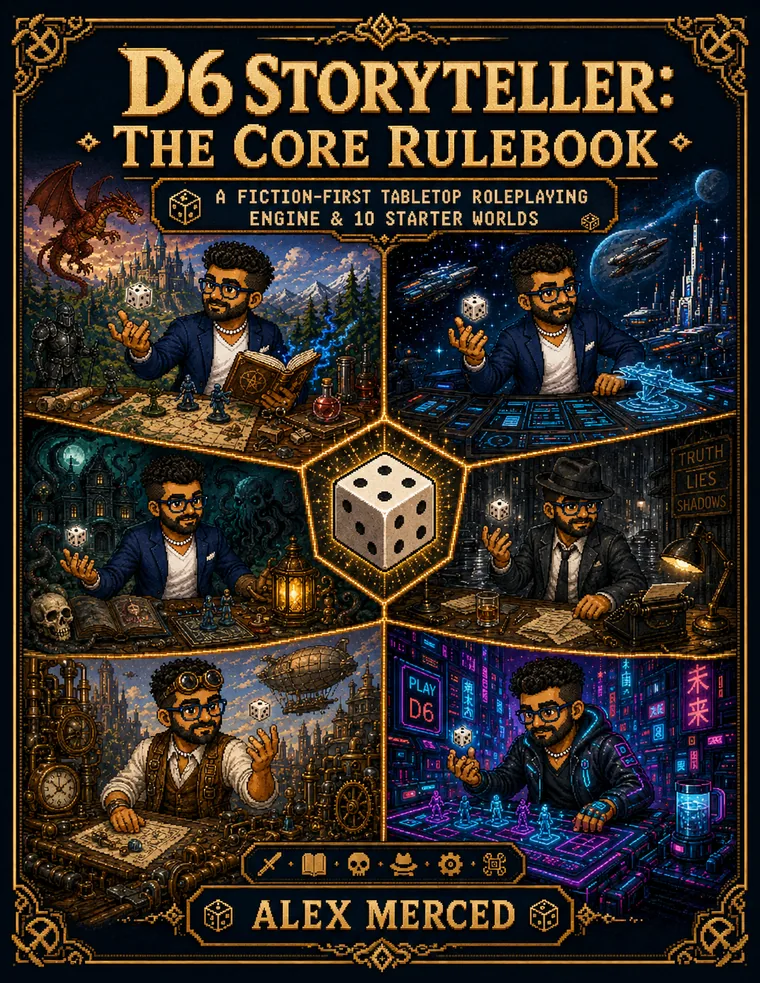
📗 Start Here
The Core Rulebook
Fantasy · Sci-Fi
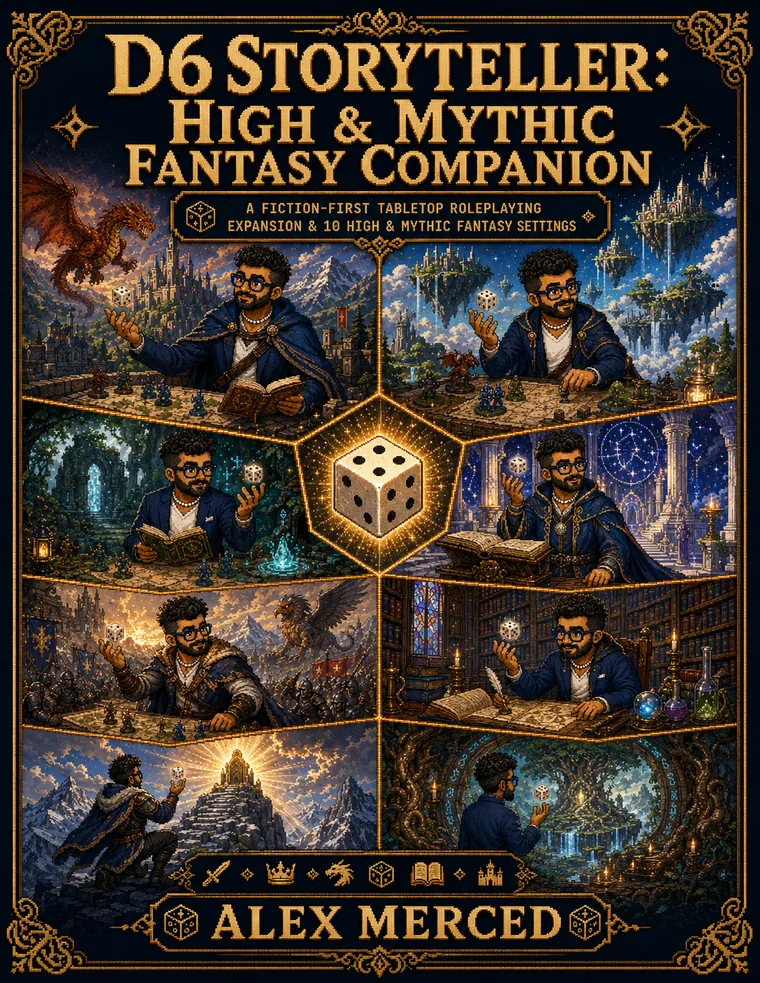
Companion 1
High & Mythic Fantasy
Fantasy · Mythic
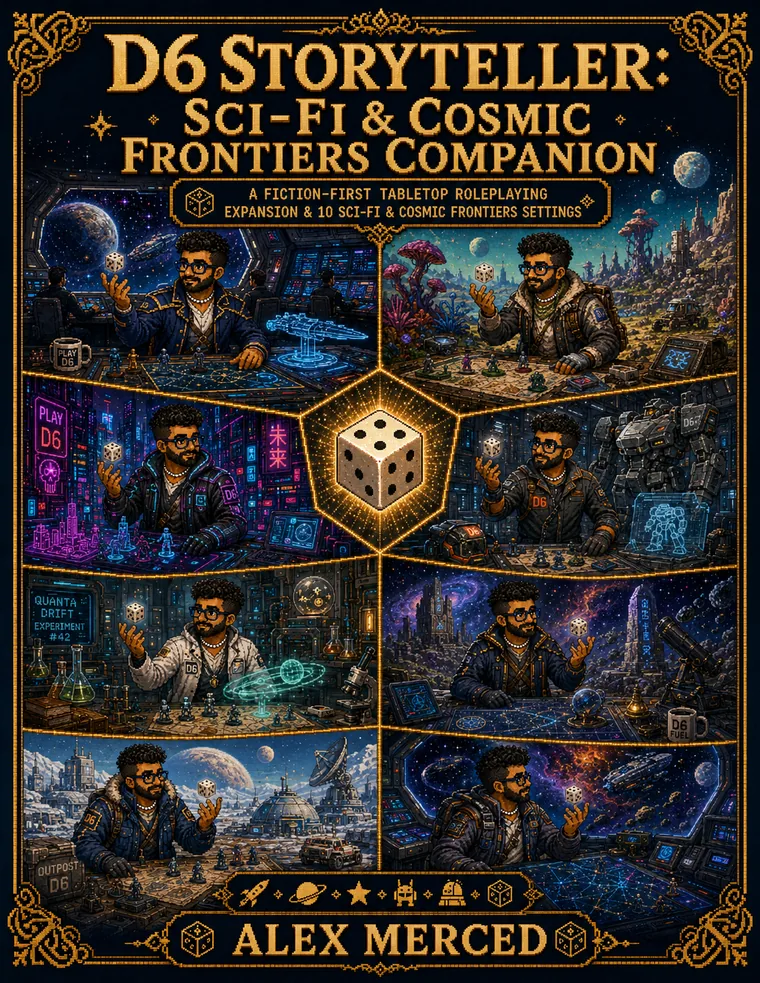
Companion 2
Sci-Fi & Cosmic Frontiers
Sci-Fi · Space Opera
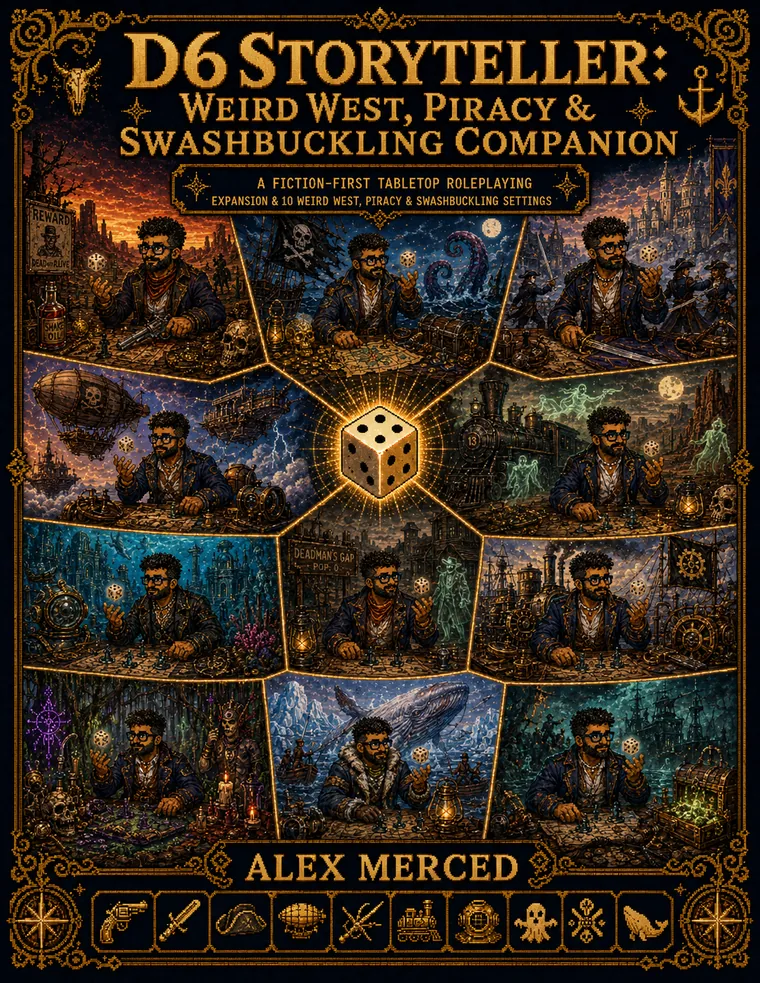
Companion 3
Weird West & Swashbuckling
Weird West · Piracy
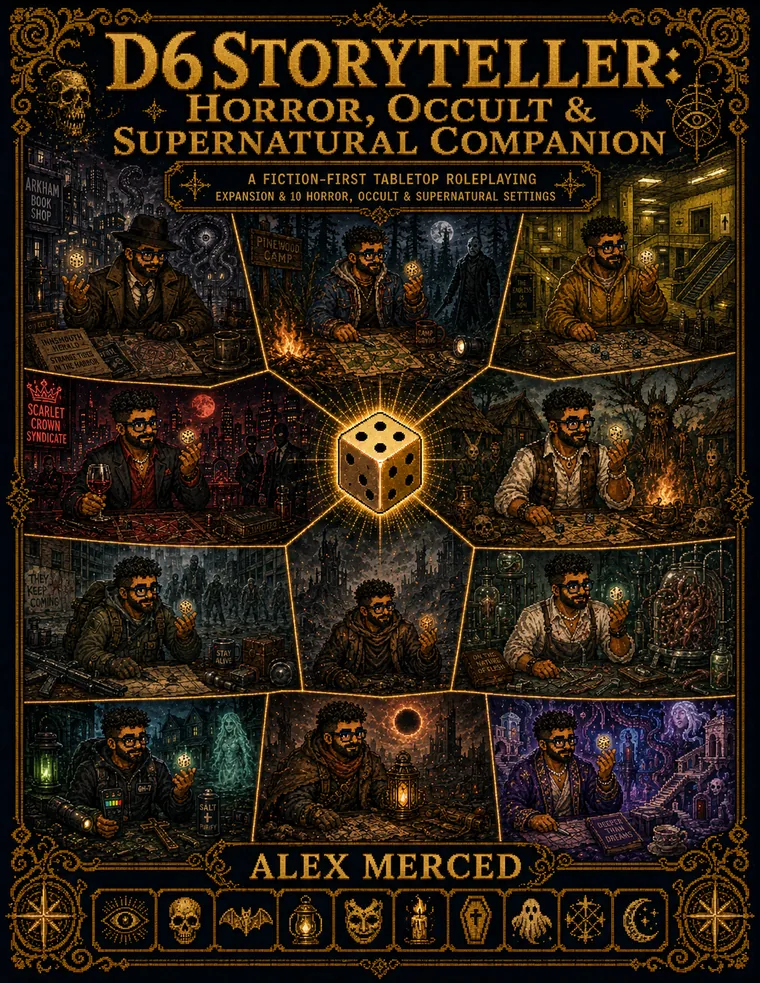
Companion 4
Horror & Supernatural
Horror · Occult
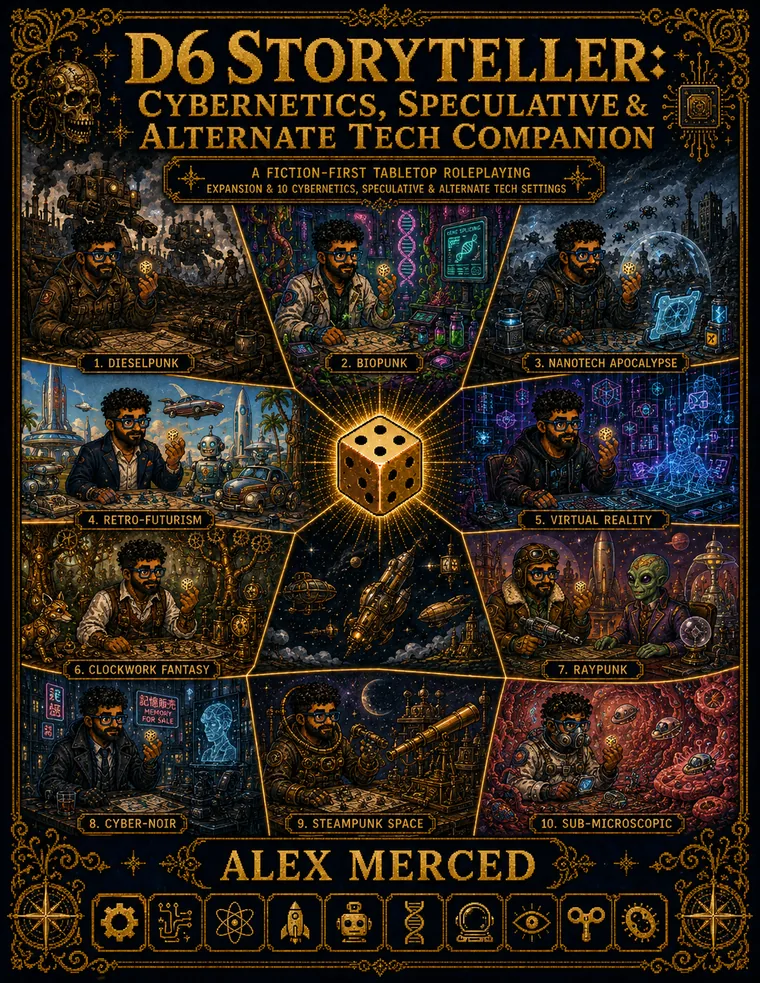
Companion 5
Cybernetics & Alternate Tech
Cyberpunk · Speculative
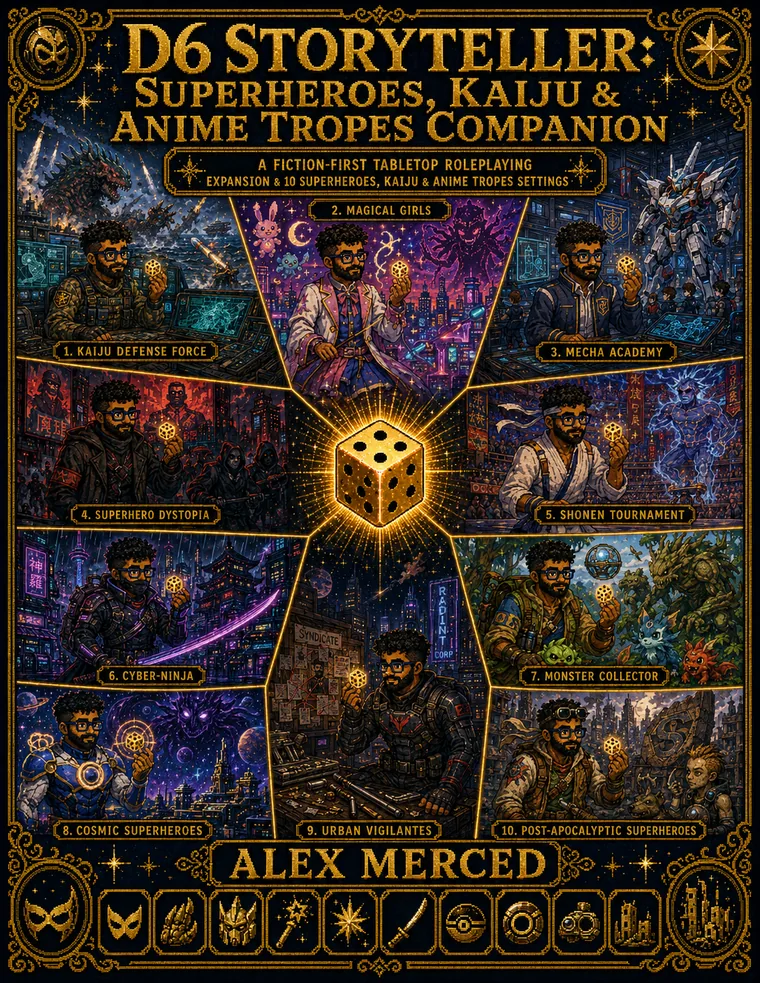
Companion 6
Superheroes & Anime Tropes
Superheroes · Kaiju
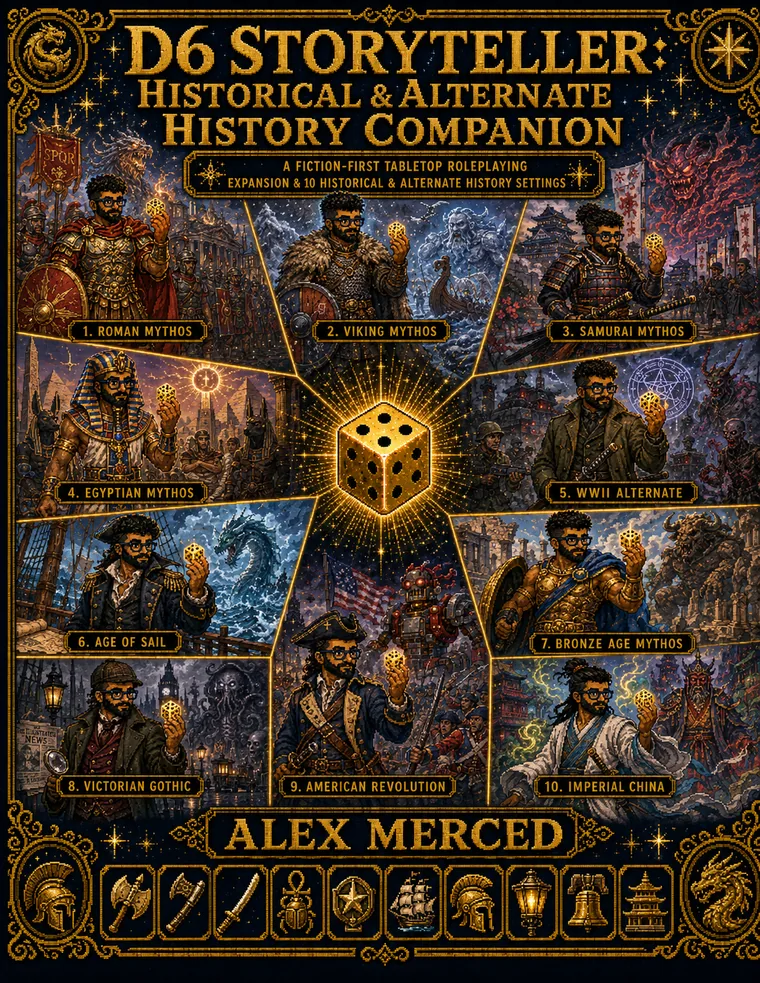
Companion 7
Historical & Alternate History
Historical · Alternate History
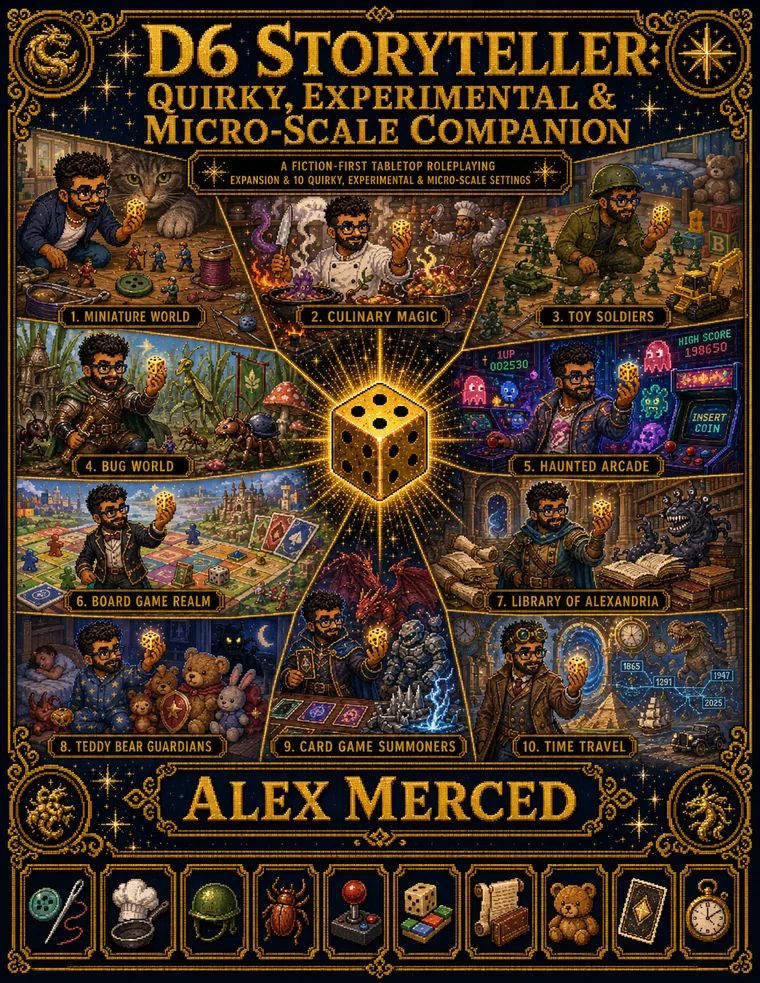
Companion 8
Quirky & Experimental
Experimental · Cozy
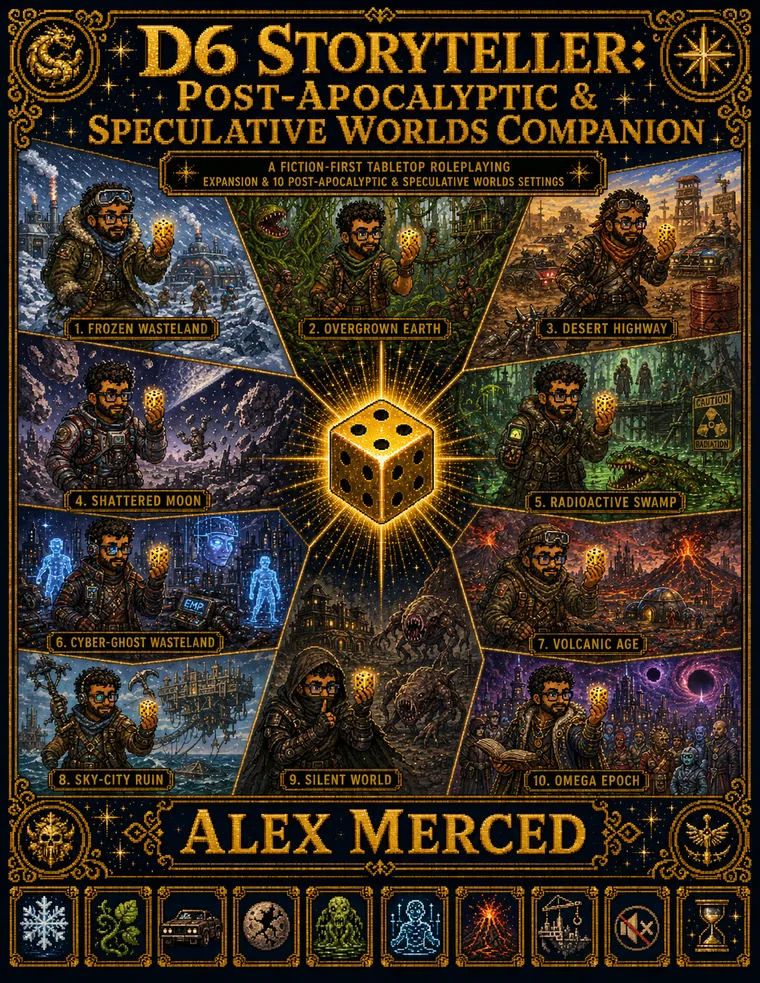
Companion 9
Post-Apocalyptic Worlds
Post-Apocalyptic · Survival
Ready to Roll?
The D6 Storyteller Core Rulebook has everything you need to start your first session: complete rules, character creation, Storyteller guidance, and ten ready-to-play worlds. Available on Amazon in paperback and Kindle.